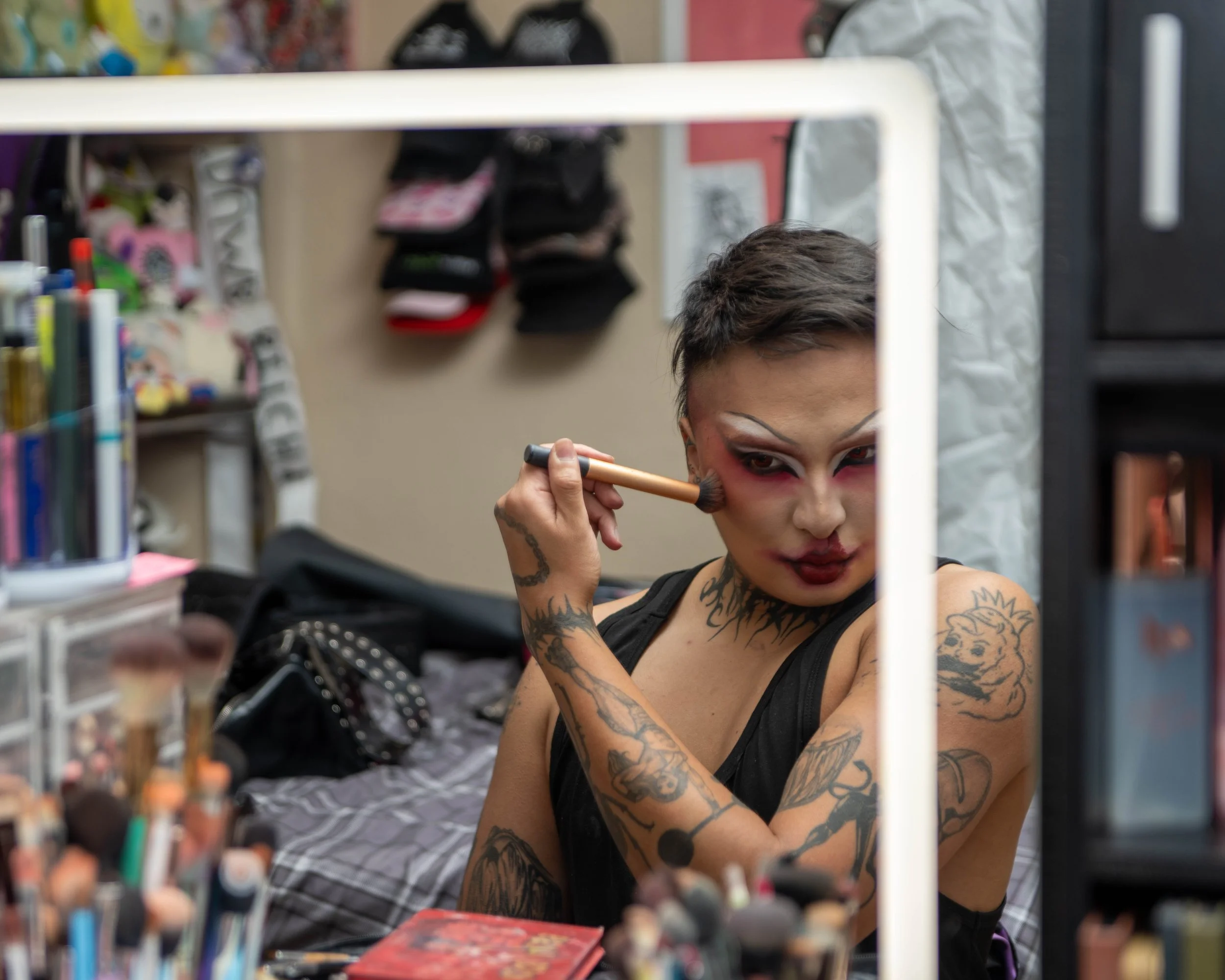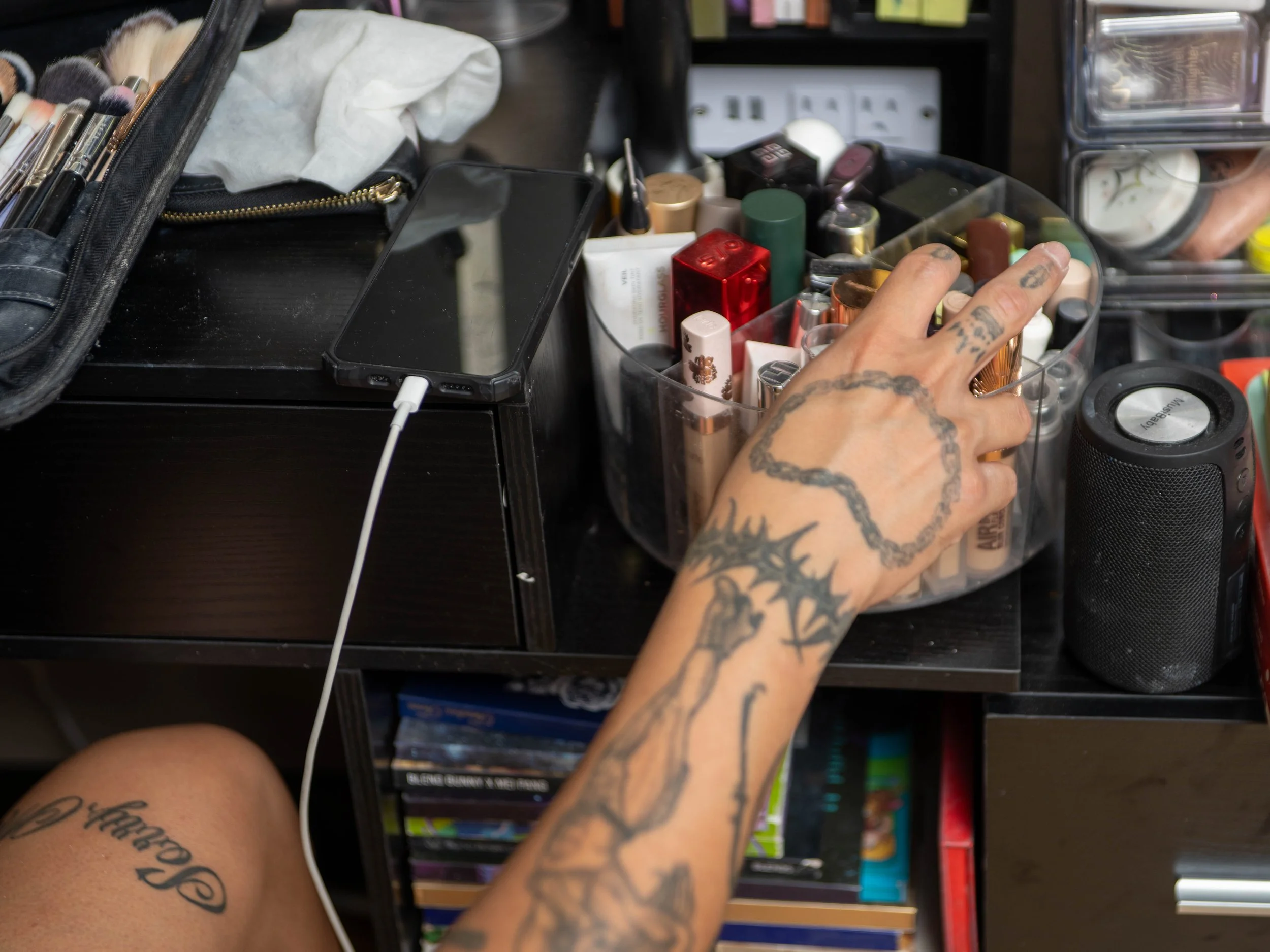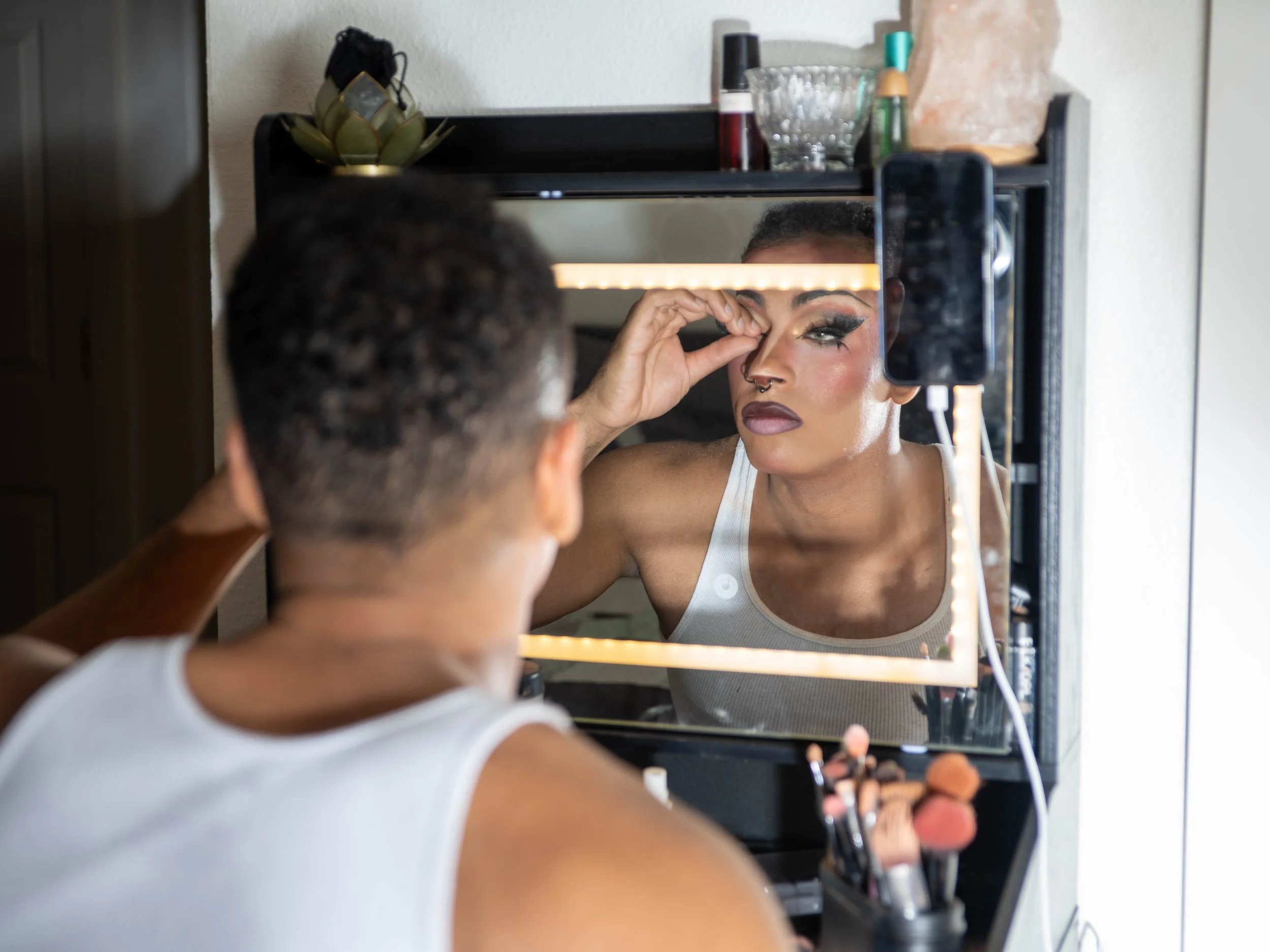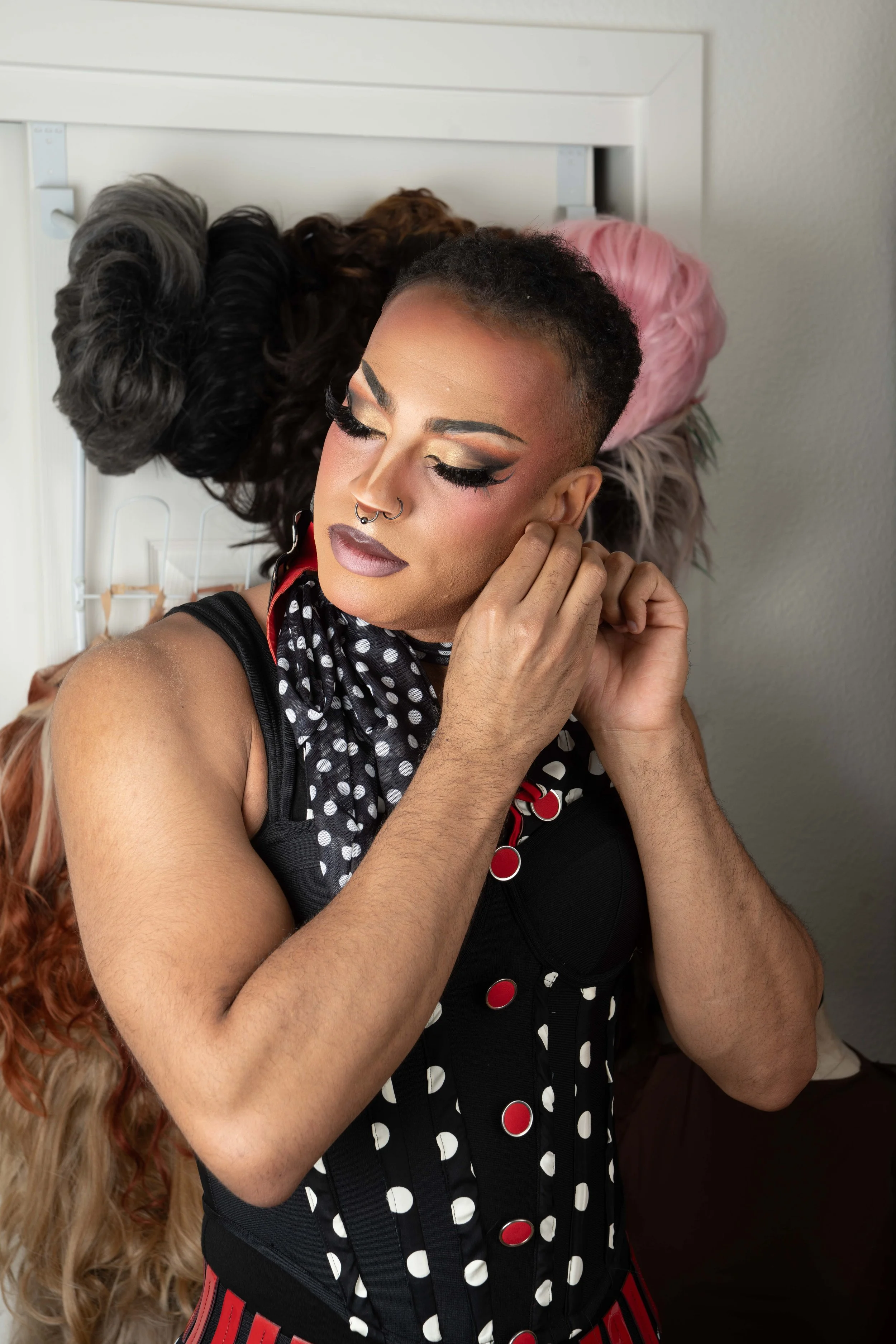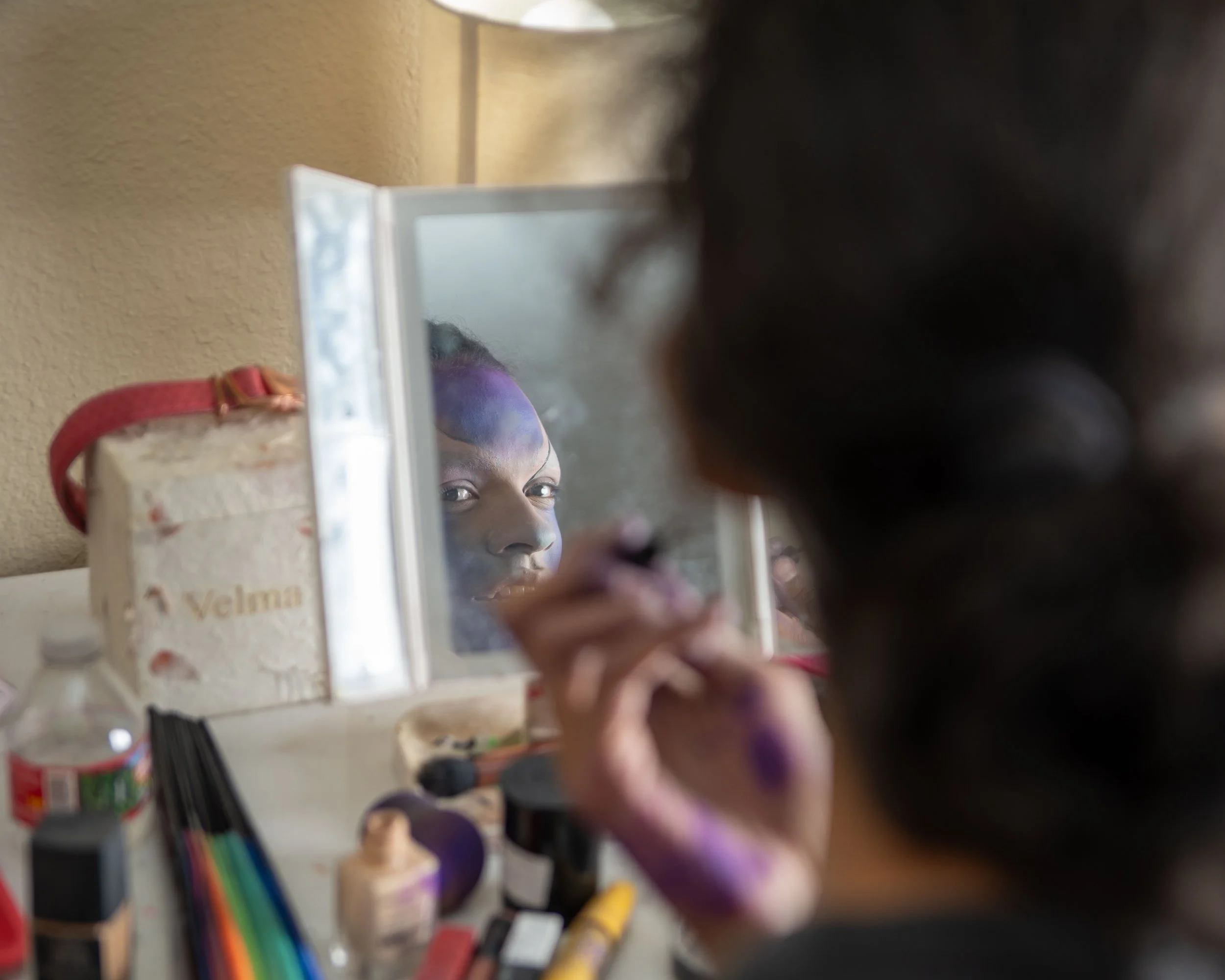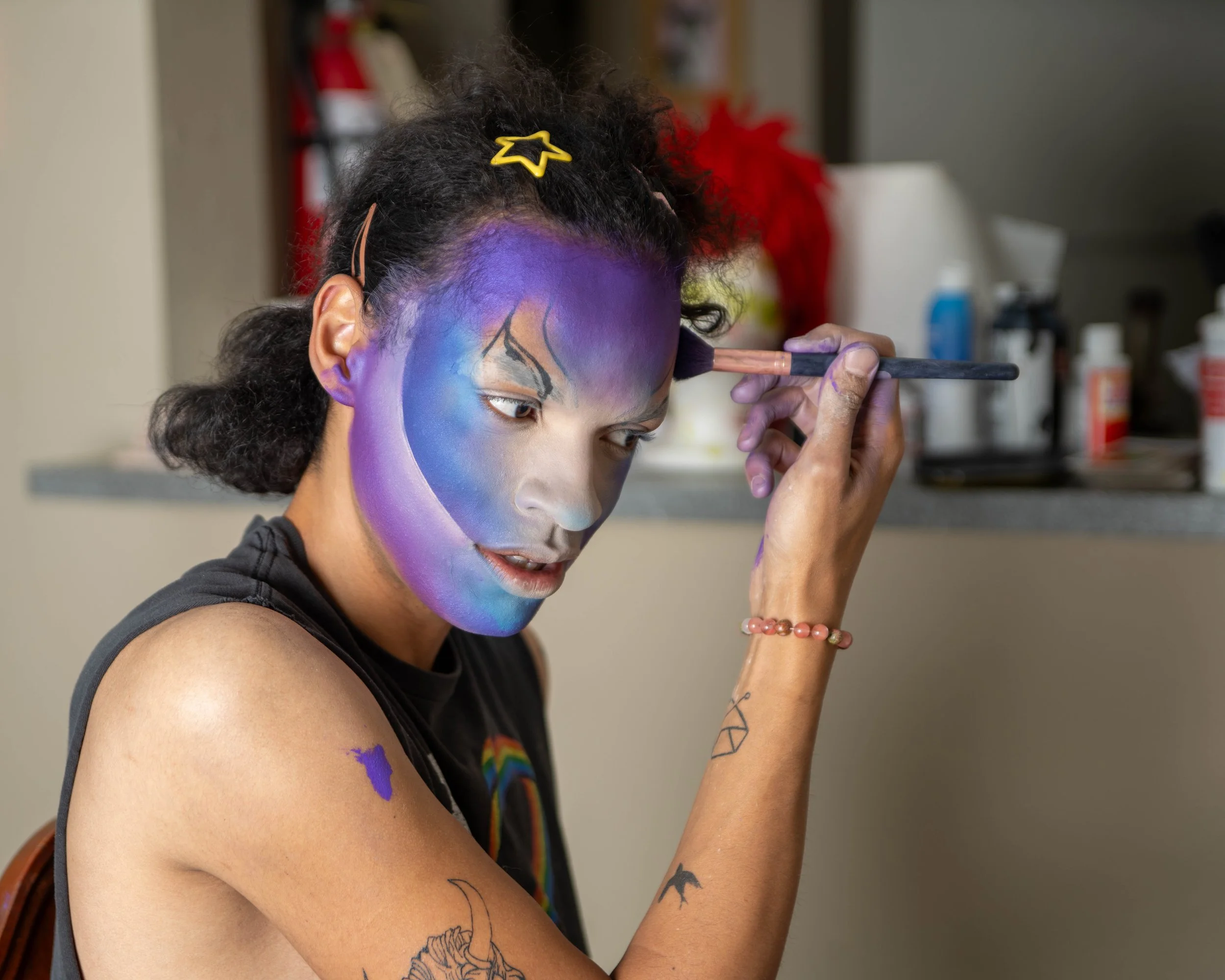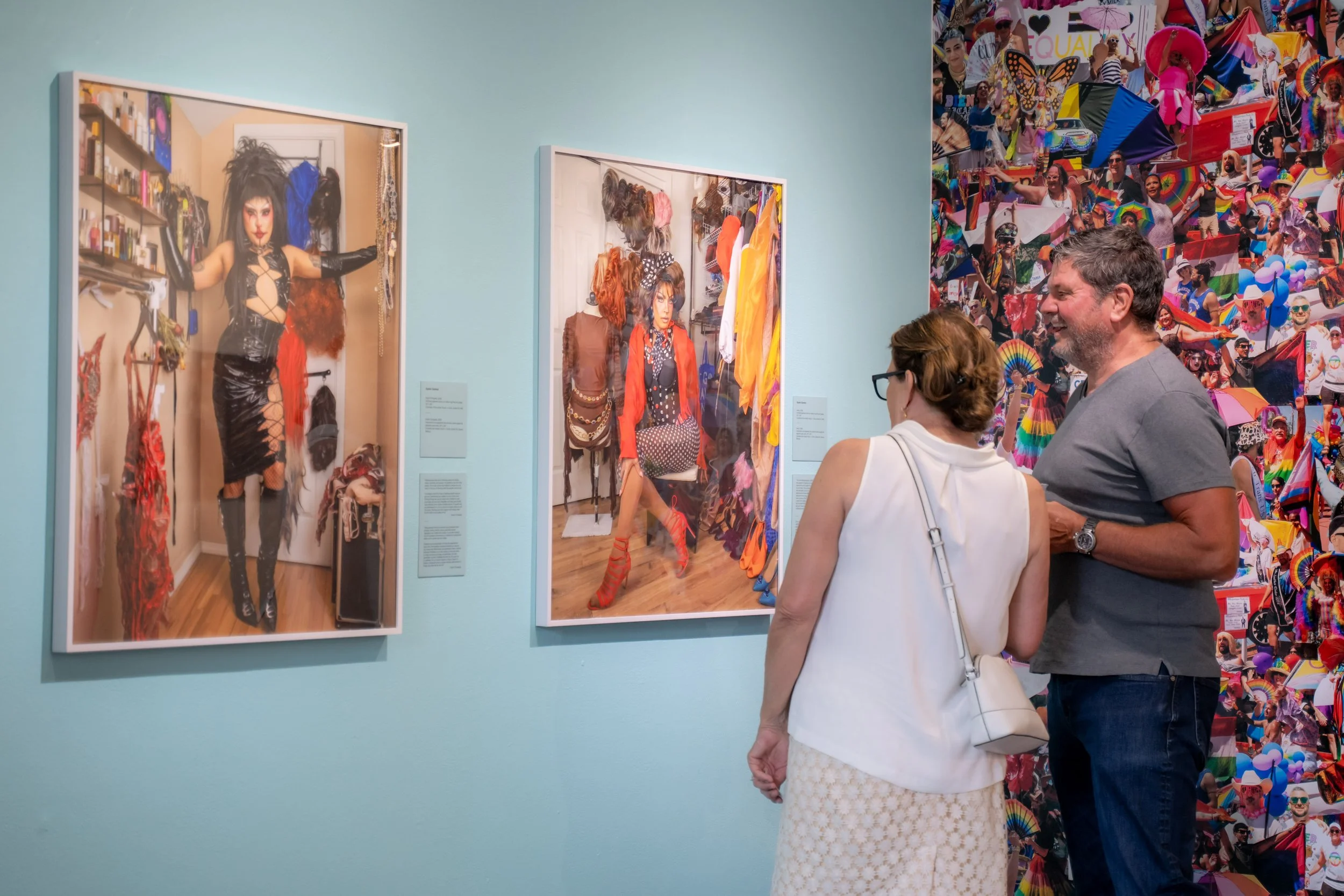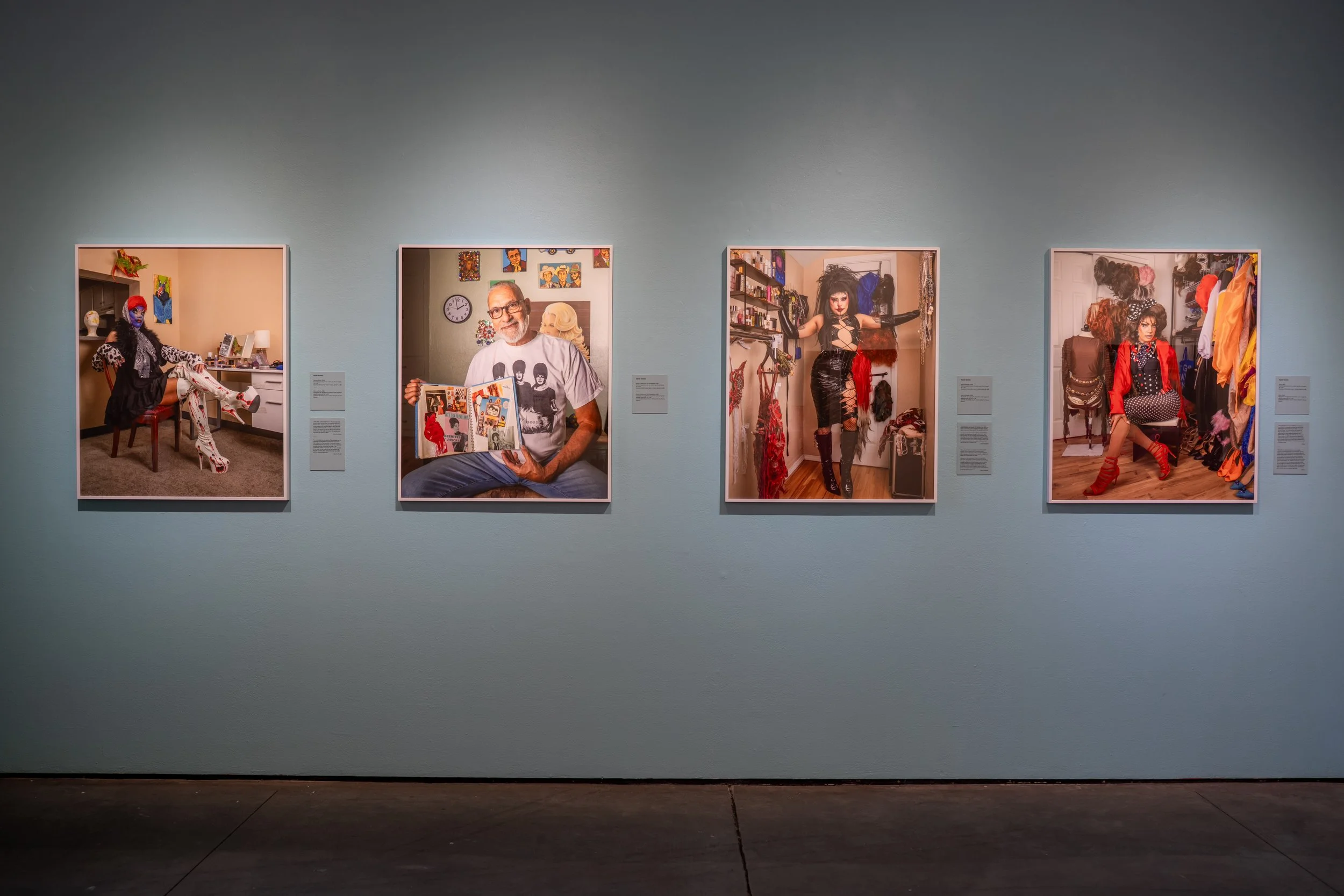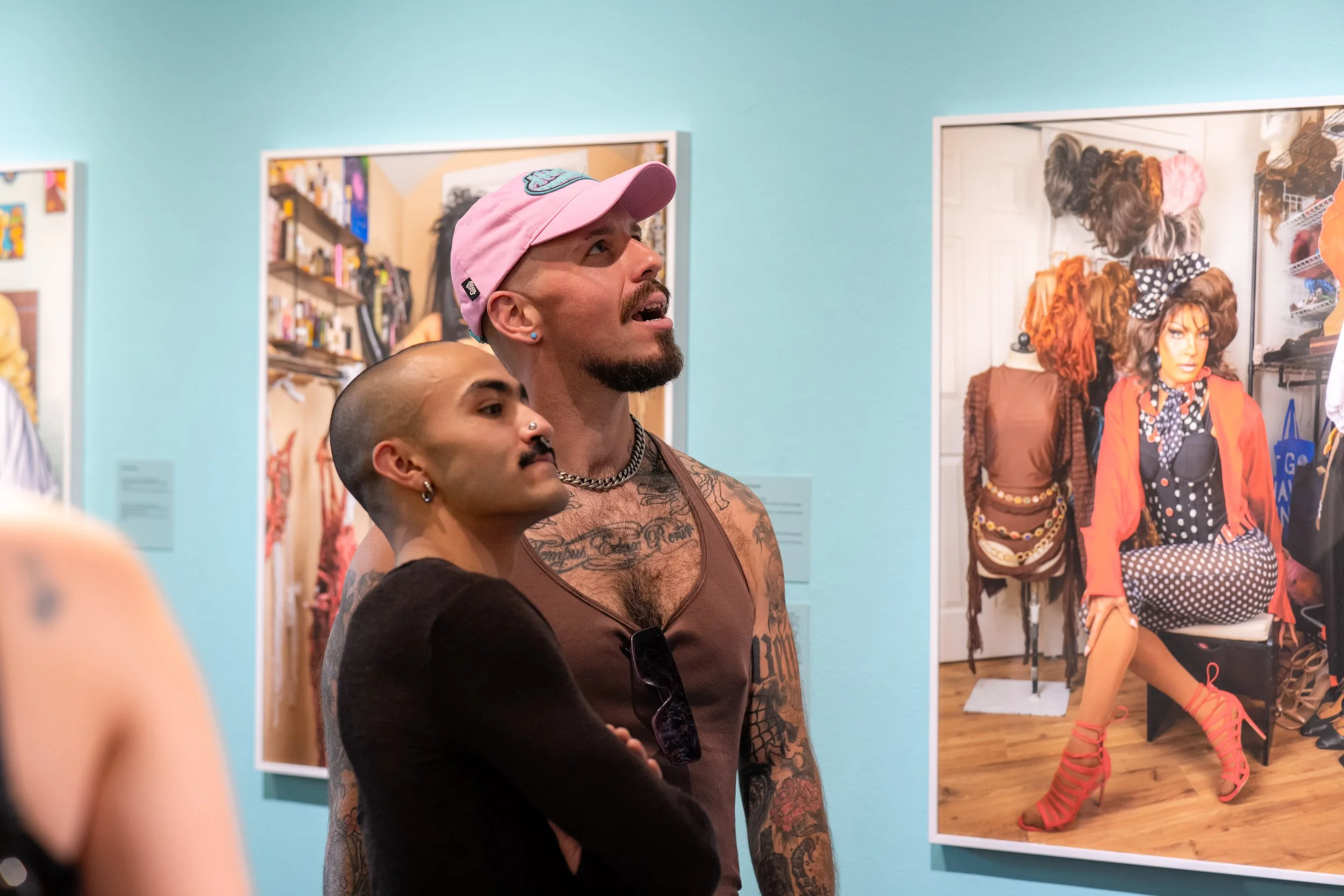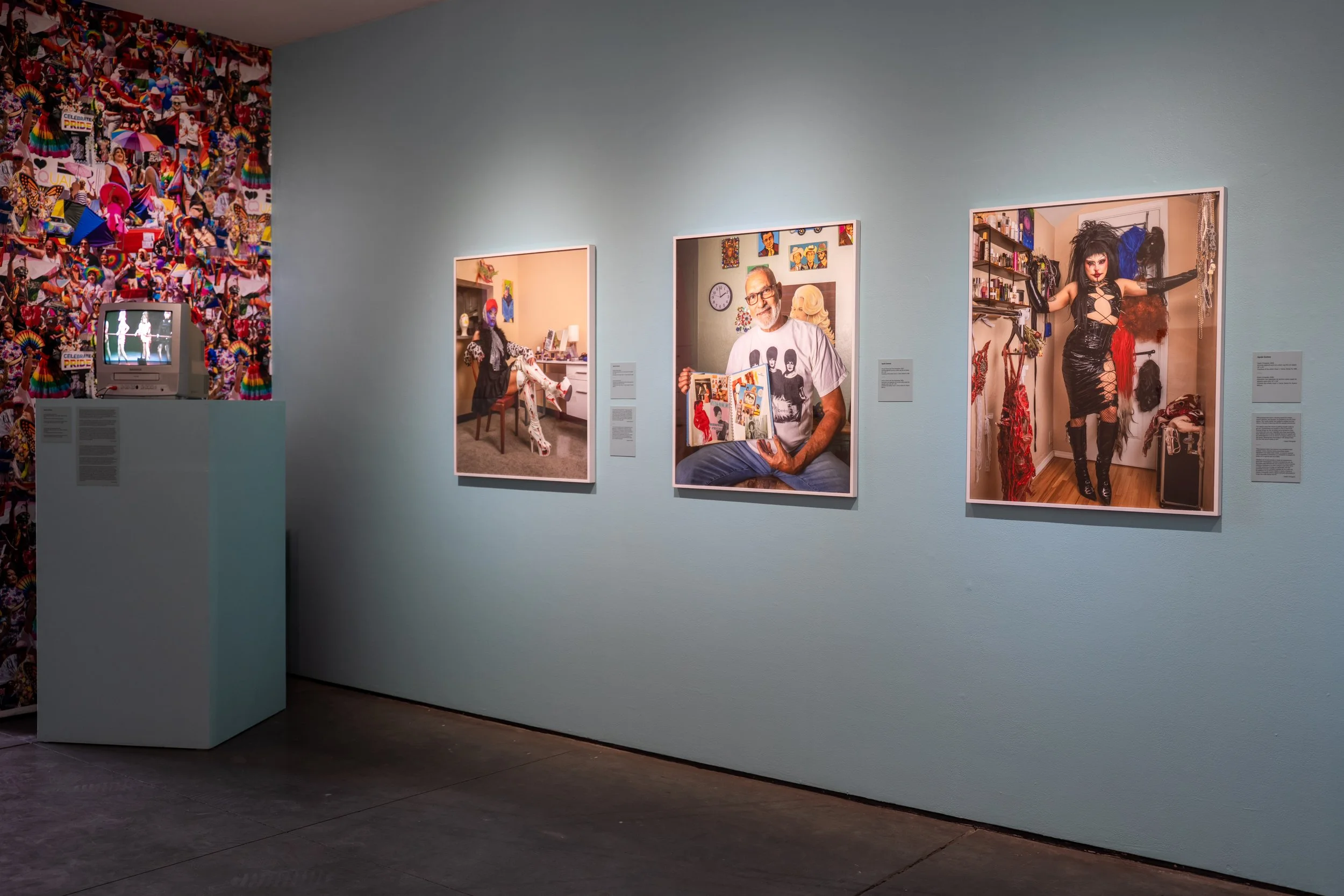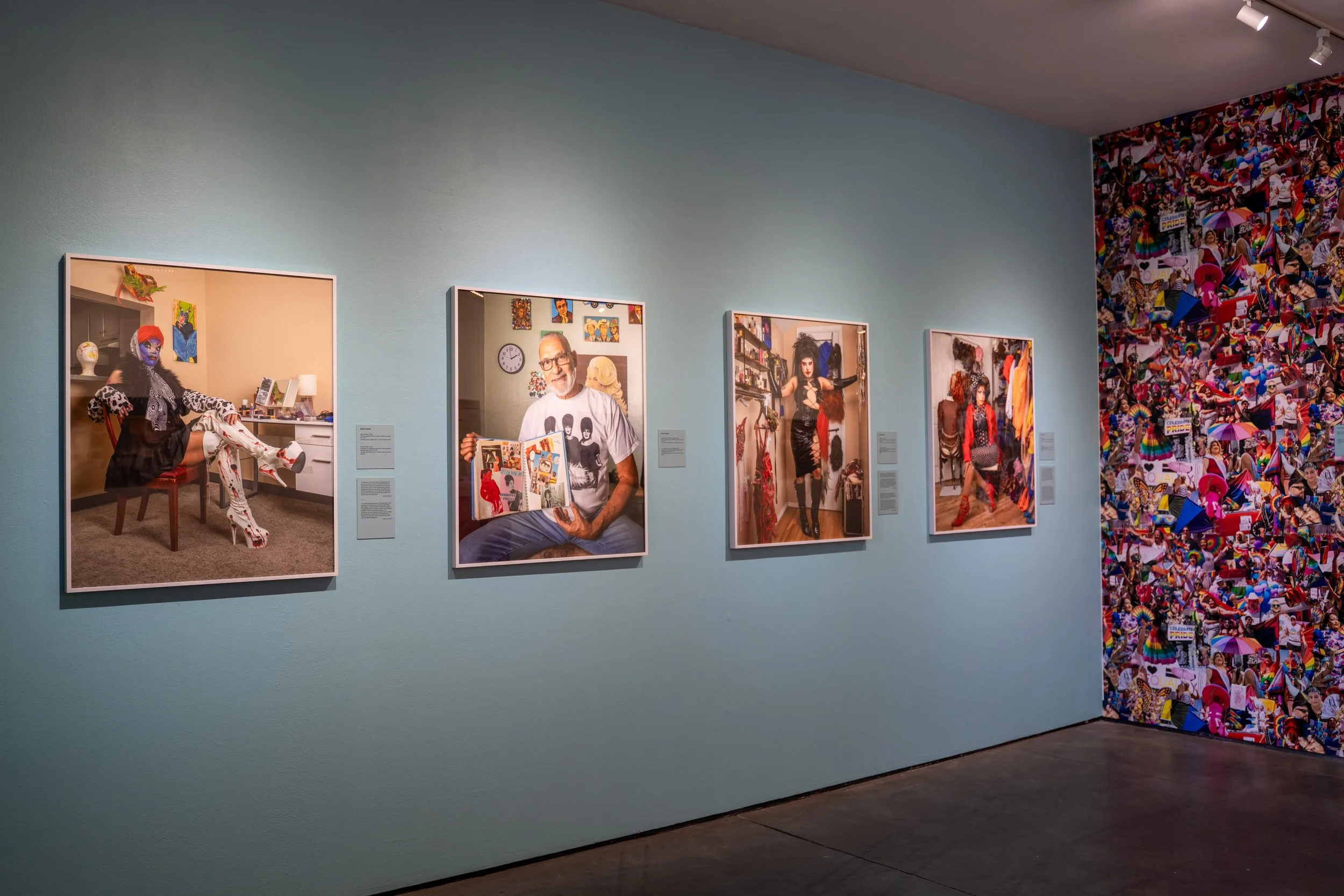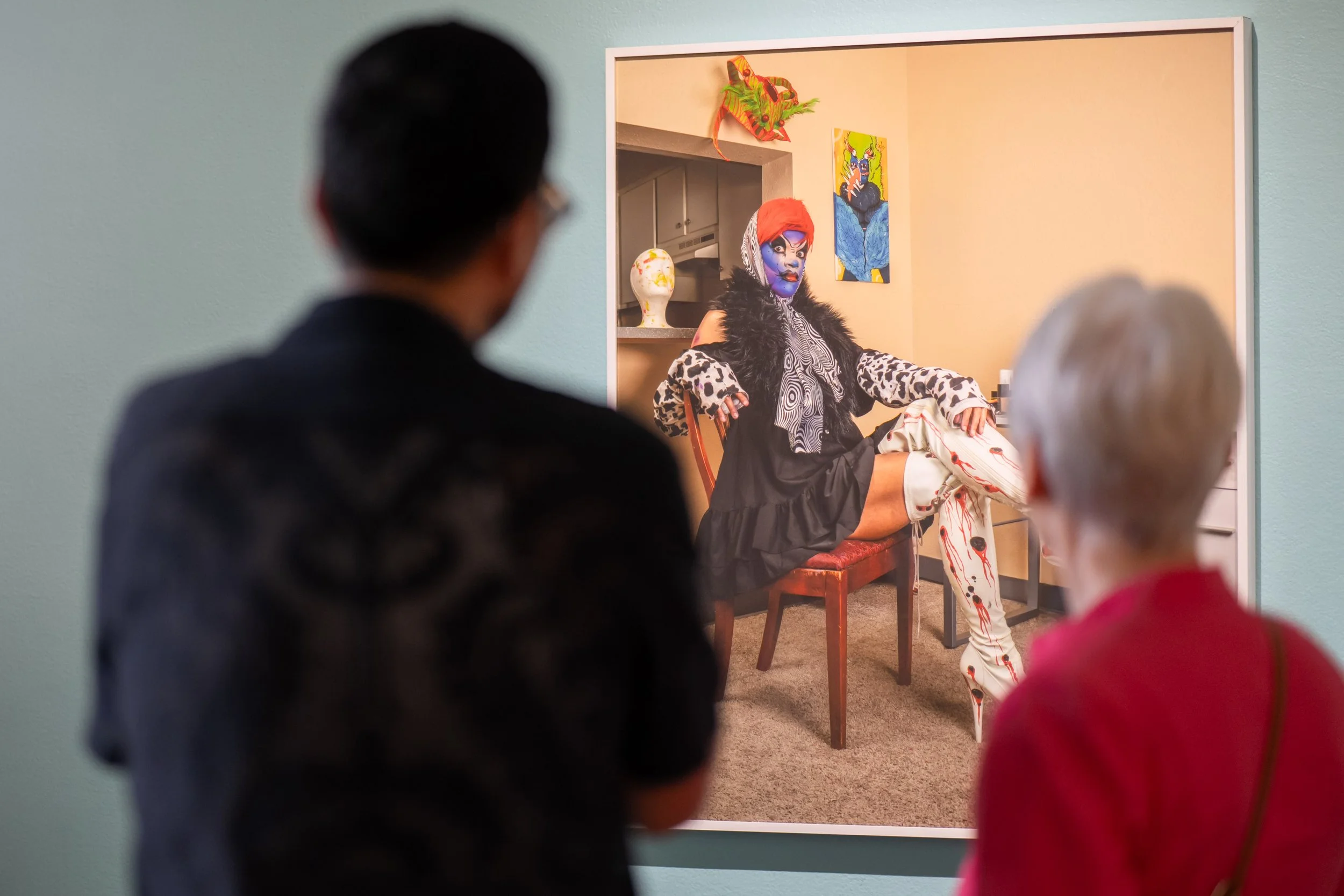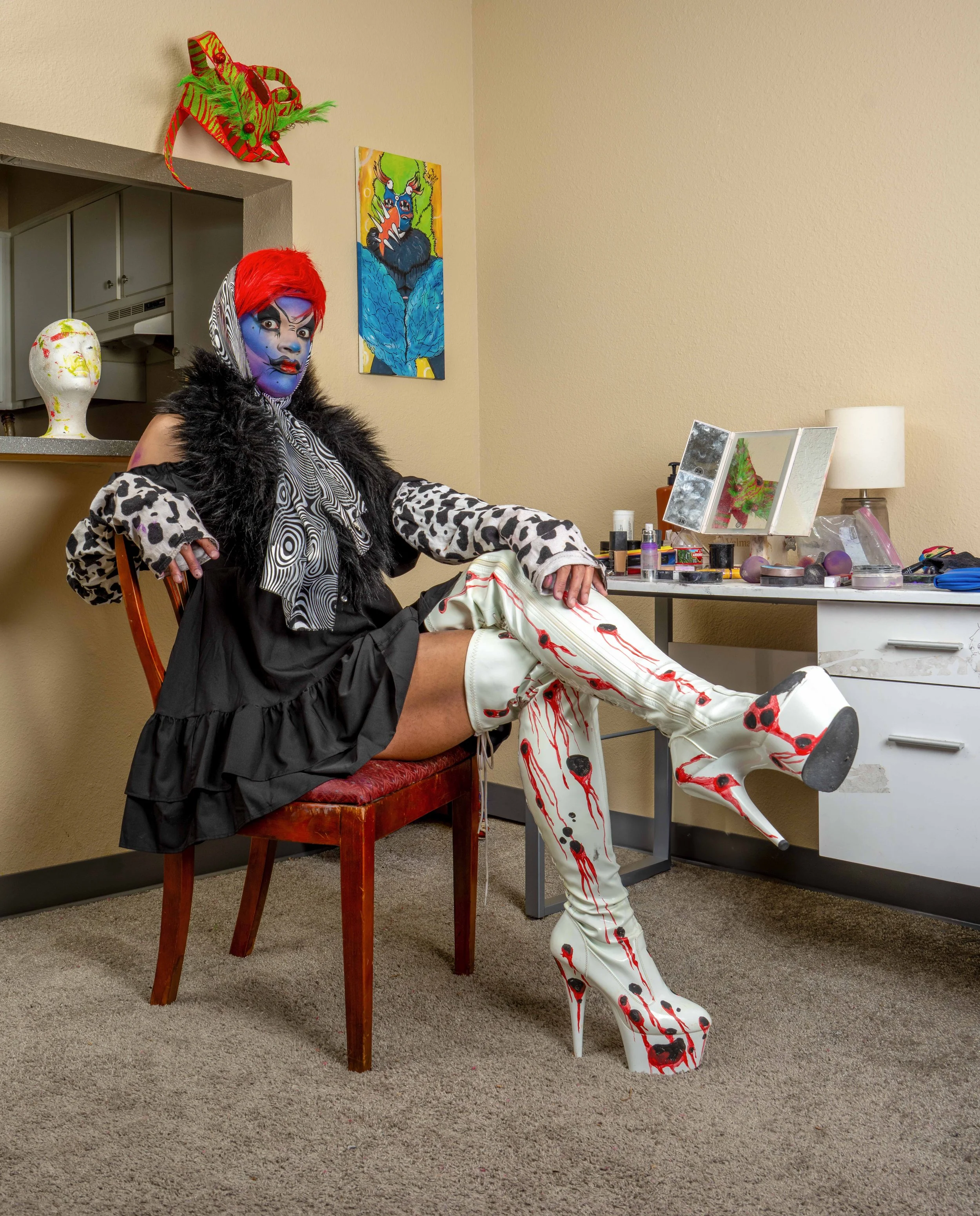
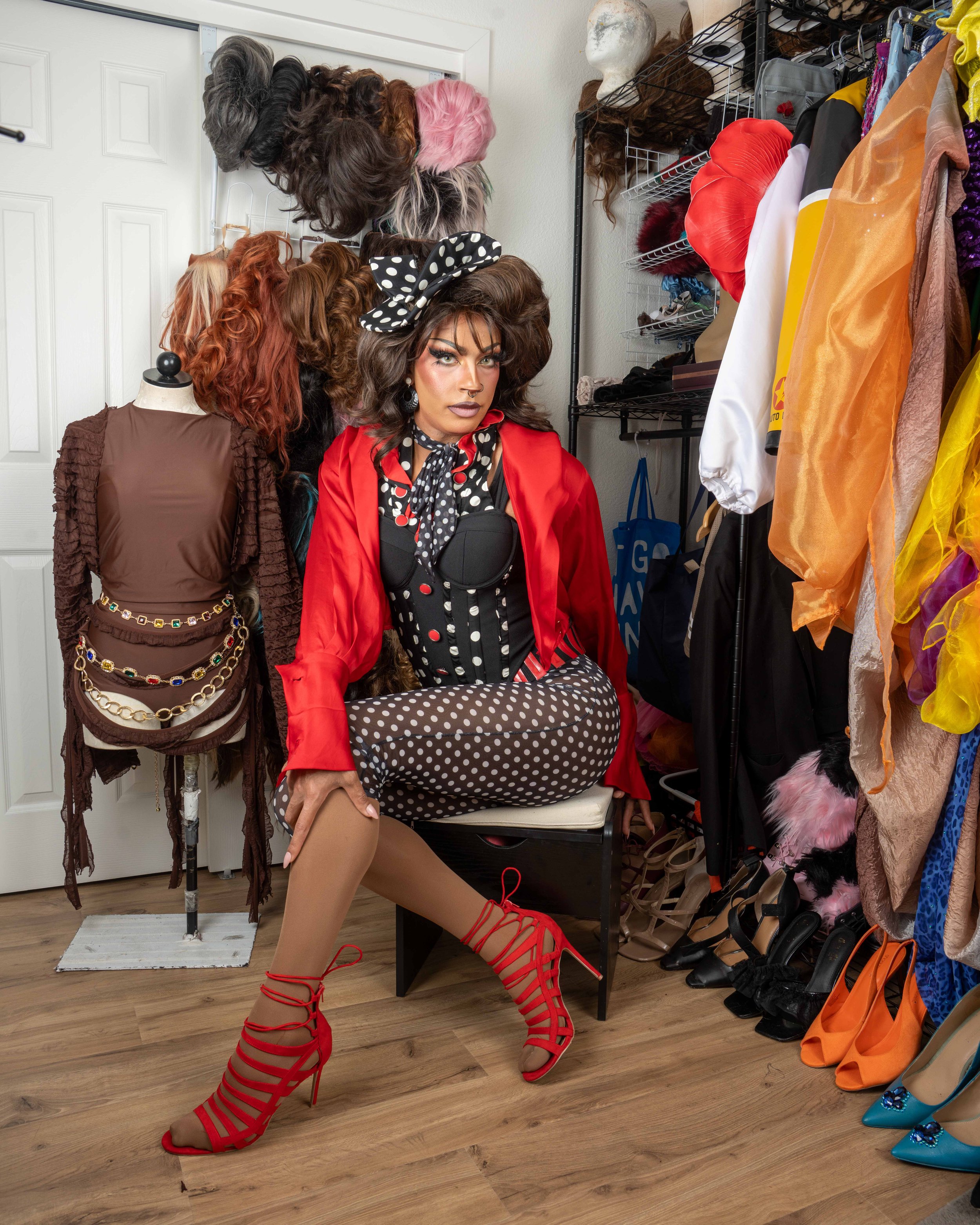
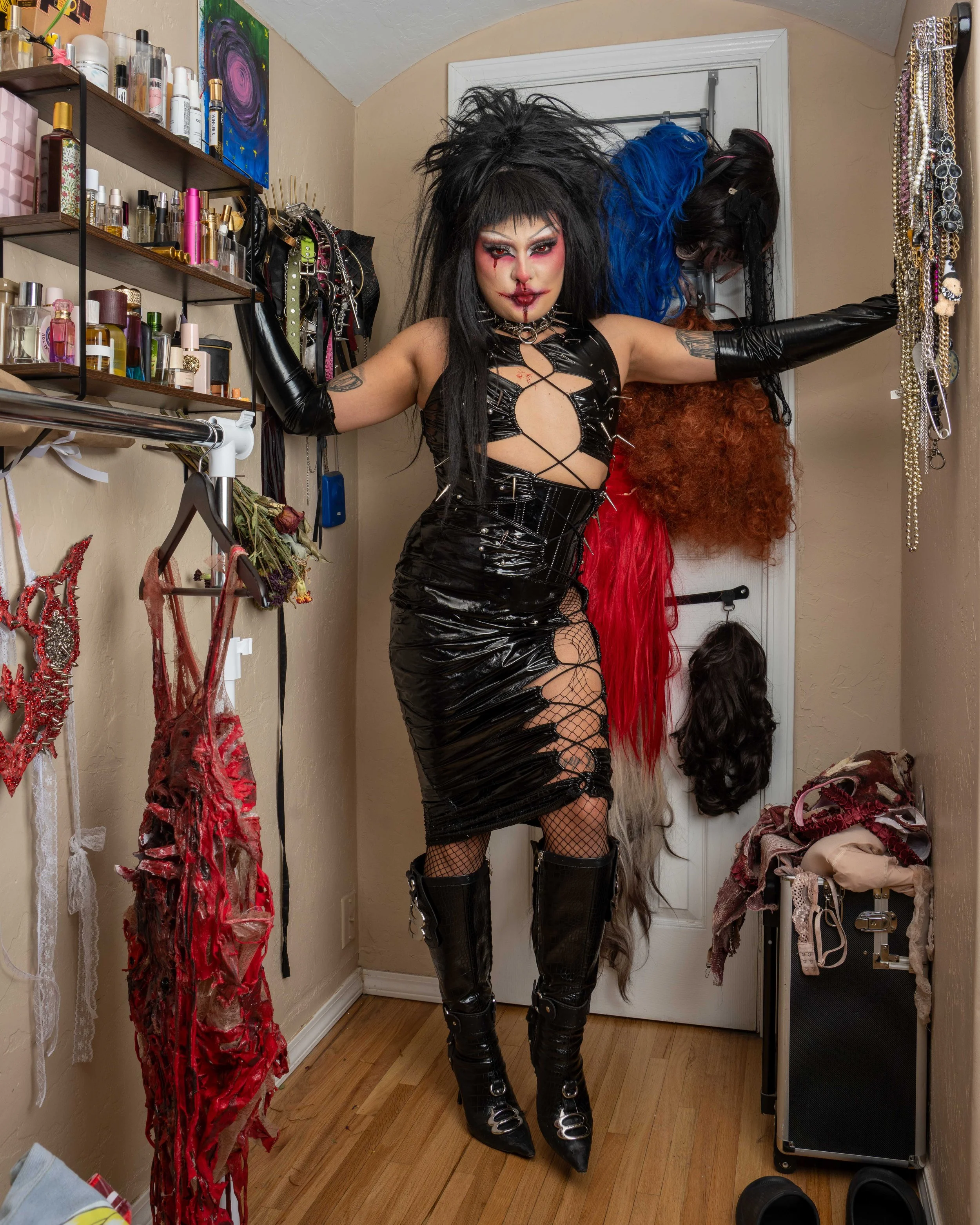
For the past several years, my work has explored the preservation of 2SLGBTQ+ histories in New Mexico, focusing on the stories, individuals, and communities that are often absent from traditional archives. This work continues through environmental portraits of Albuquerque drag performers photographed within their drag rooms, the spaces where identities are constructed, costumes are assembled, and personal histories accumulate.
Filled with wigs, makeup, photographs, awards, and mementos, these rooms function as living archives. They hold evidence of performances, friendships, and community that might otherwise go undocumented. While drag is often experienced on stage, these photographs focus on the spaces where the work of transformation and storytelling begins. In many ways, drag performers serve as our cultural stewards and storytellers, ensuring that stories of celebration, struggle, and belonging continue to be remembered.
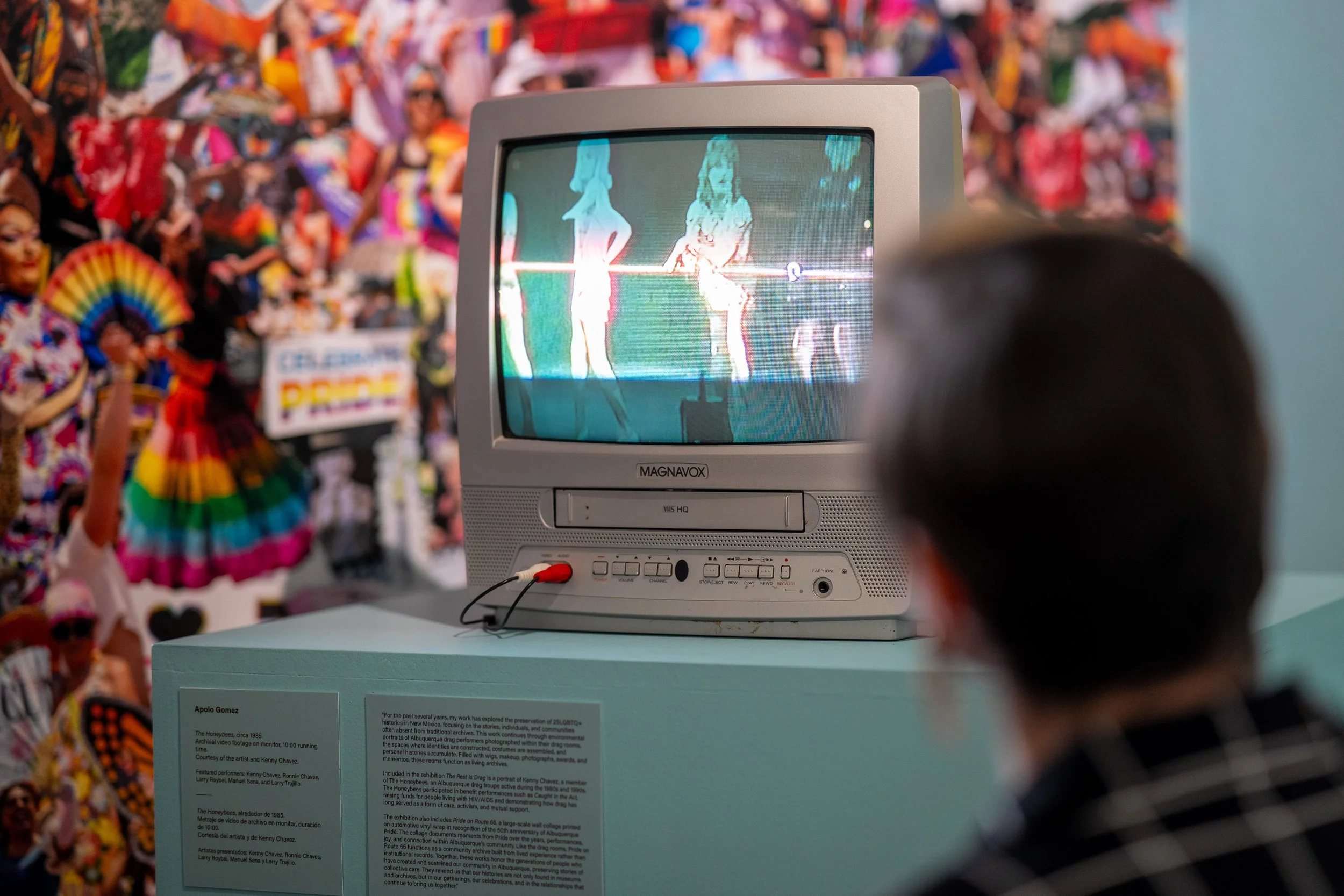
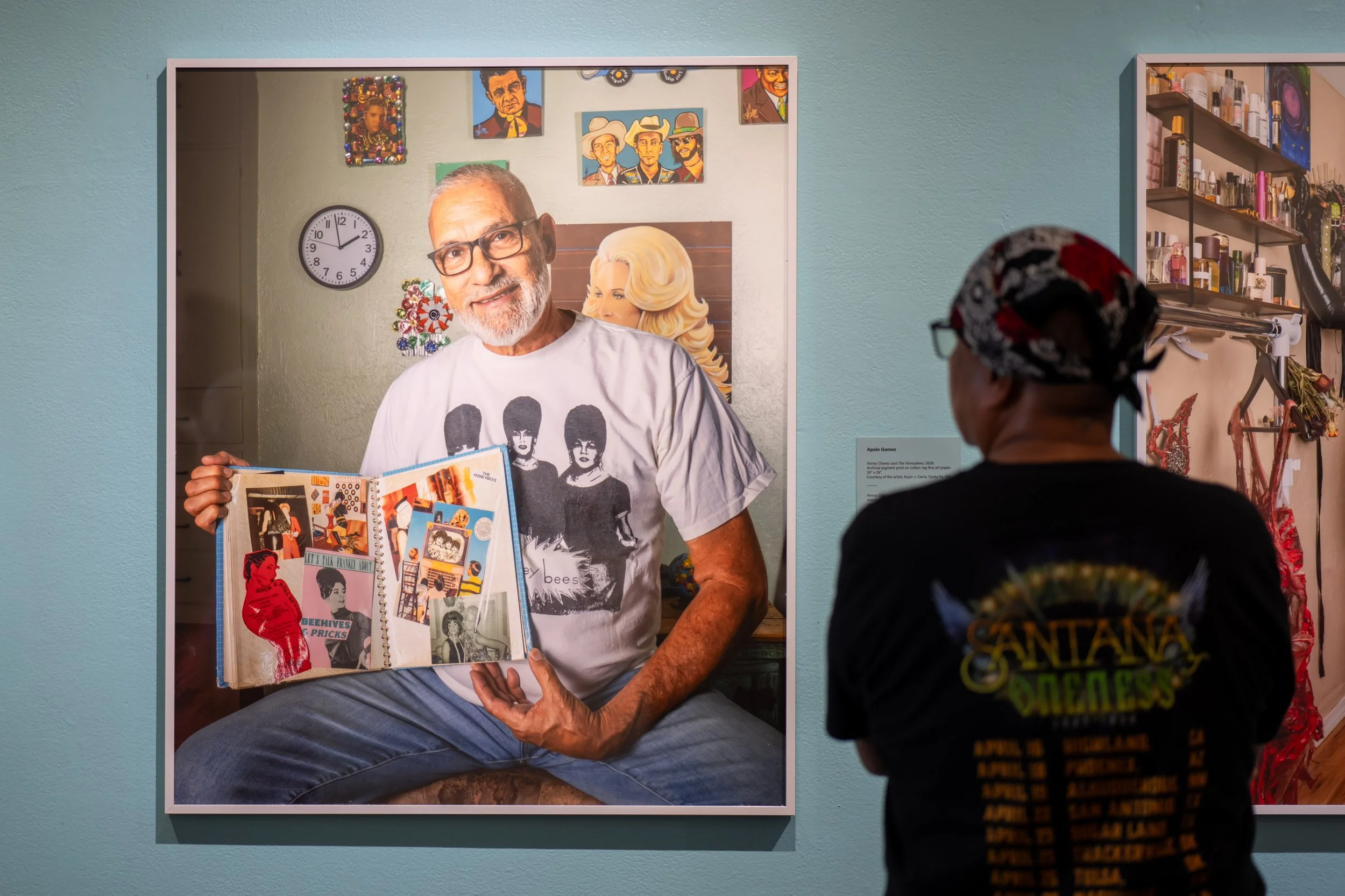
Included in the exhibition is a portrait of Kenny Chavez, a member of The Honeybees, an Albuquerque drag troupe active during the 1980s and 1990s. Through research conducted for my zine project “Tracing ChicanX Queer Histories” stories of how performers like Chavez helped shape and sustain 2SLGBTQ+ life in Albuquerque were shared. During the HIV/AIDS crisis, The Honeybees participated in benefit performances such as “Caught in the Act”, raising funds for people living with HIV/AIDS and demonstrating how drag has long served as a form of care, activism, and mutual support.
The exhibition also includes Pride on Route 66, a large-scale wall collage printed on automotive vinyl wrap in recognition of the 50th anniversary of Albuquerque Pride. The collage documents moments from Pride over the years, performances, joy, and connection within Albuquerque's community. They also reflect a tradition rooted in decades of activism and visibility.
Having been raised in a rural part of New Mexico where Pride celebrations did not exist, I understand how transformative it can be to encounter a public space where LGBTQ+ people are not only accepted, but celebrated. Pride emerged from acts of resistance, most notably the 1969 Stonewall uprising on Christopher Street in New York City, and has since become a way for 2SLGBTQ+ communities to claim visibility, honor those who came before us, and imagine more equitable futures. For many people in New Mexico, Albuquerque Pride has served as a place to find community, experience belonging, and recognize that they are part of a larger history.
Like the drag rooms, Pride on Route 66 functions as a community archive built from lived experience rather than institutional records. Together, these works honor the generations of people who have created and sustained our community in Albuquerque, preserving stories of collective care. They remind us that our histories are not only found in museums and archives, but in our gatherings, our celebrations, and in the relationships that continue to bring us together.