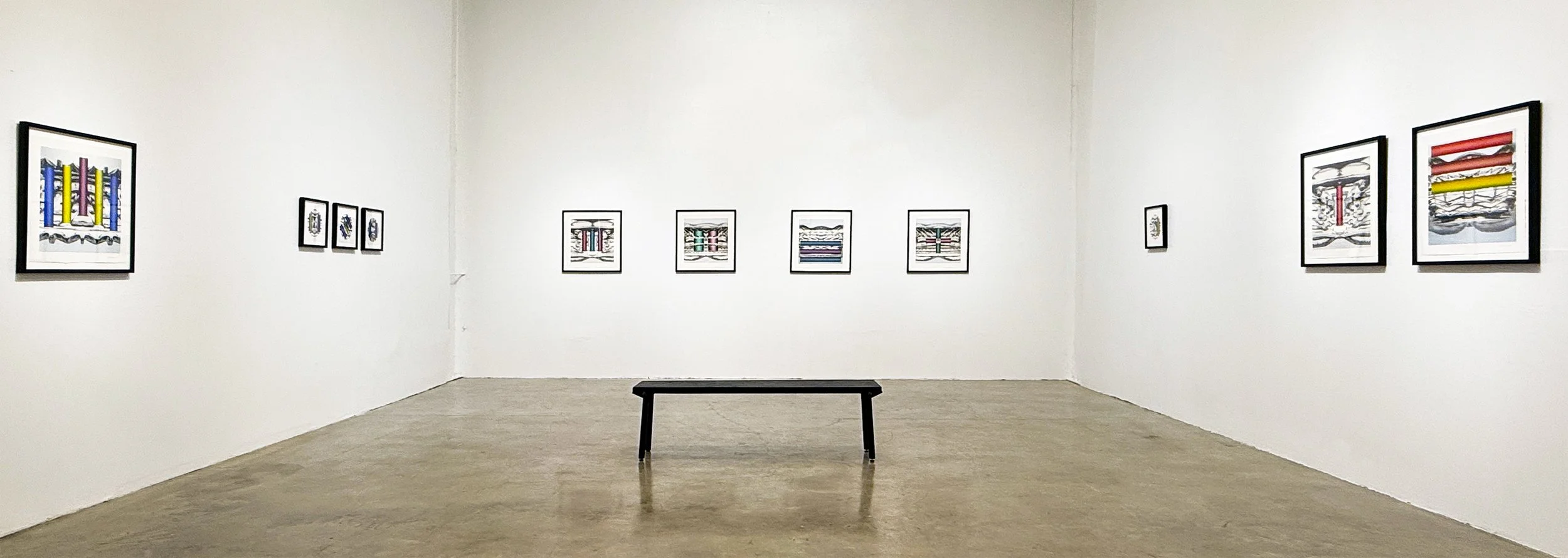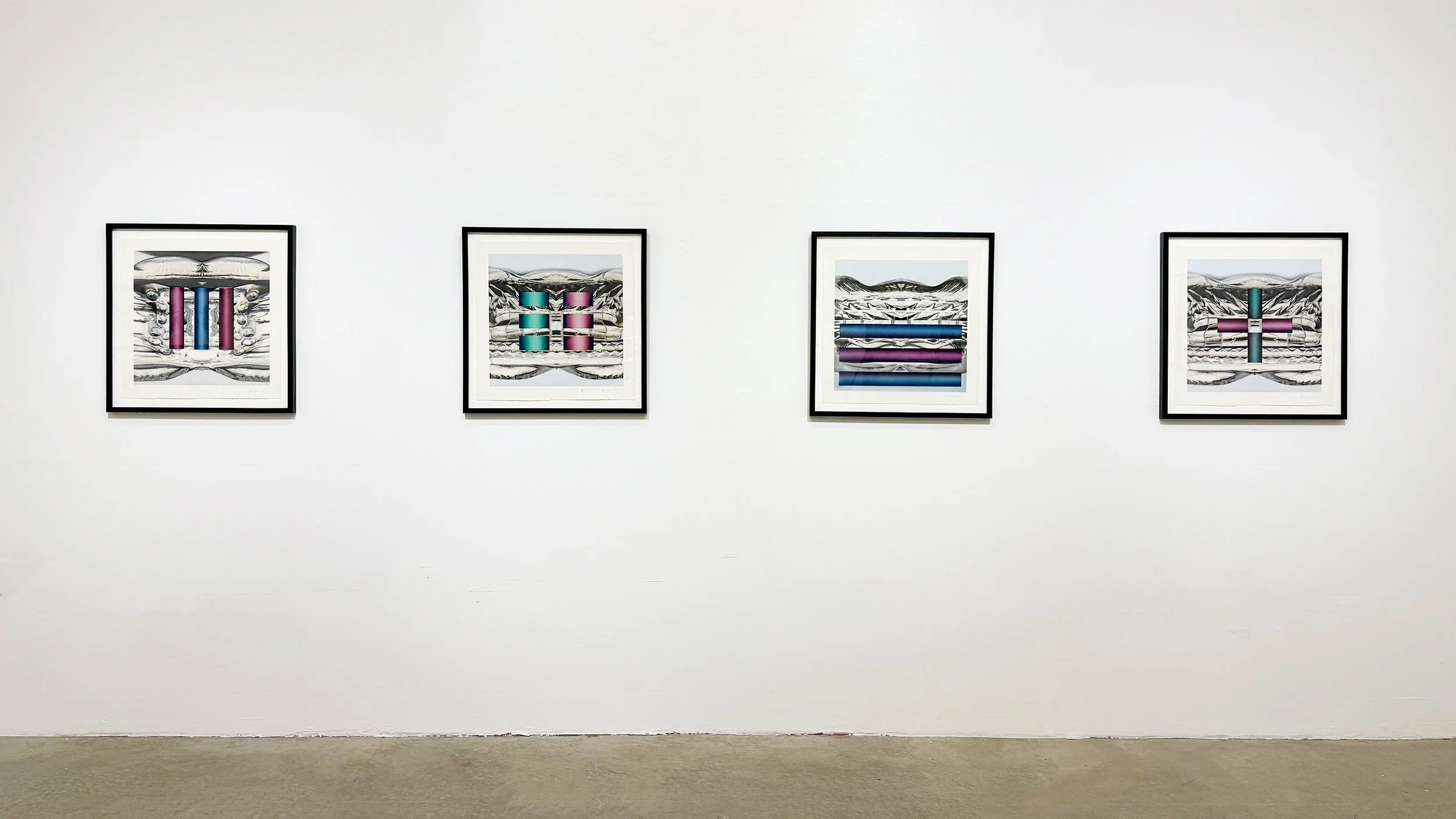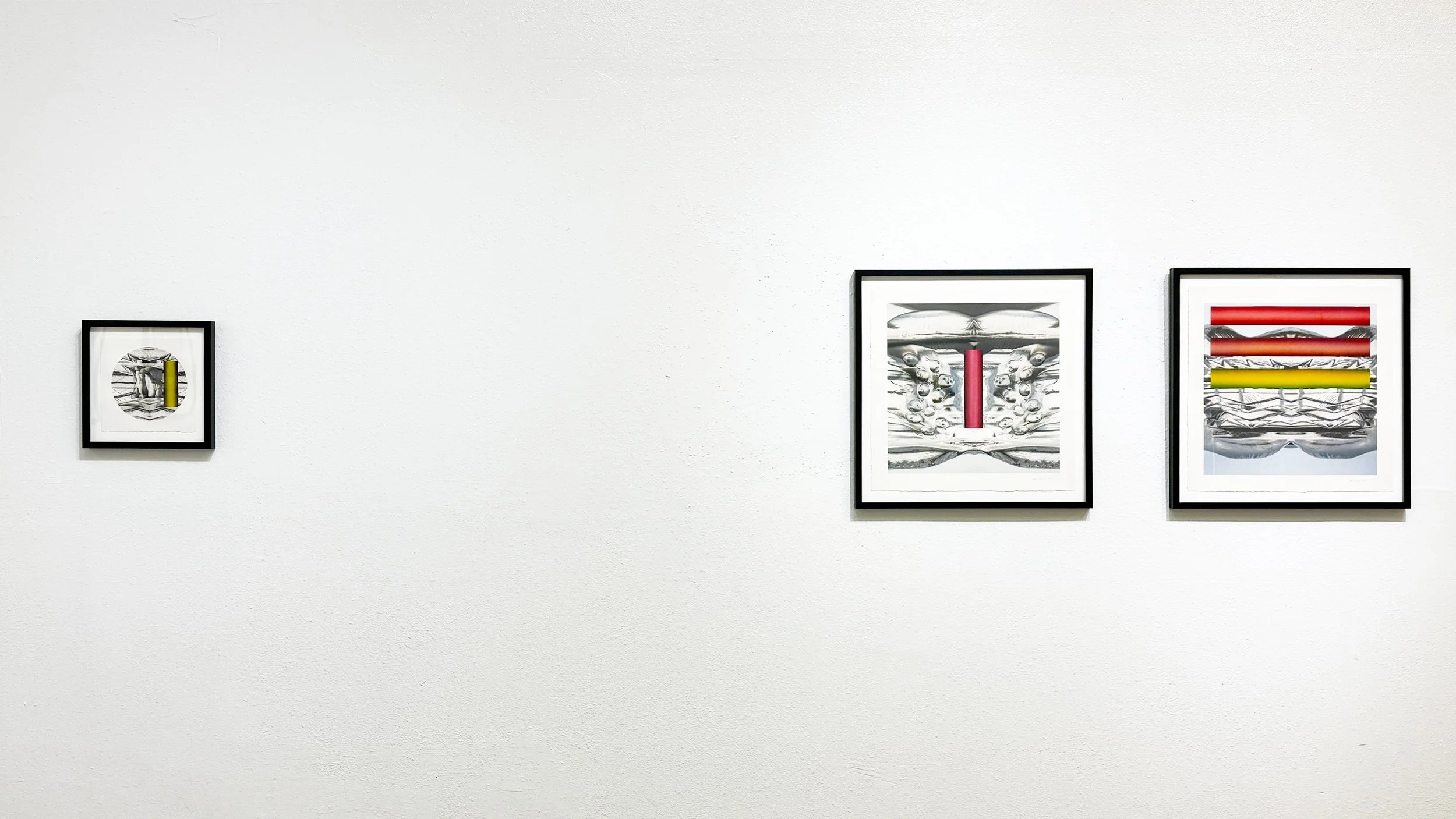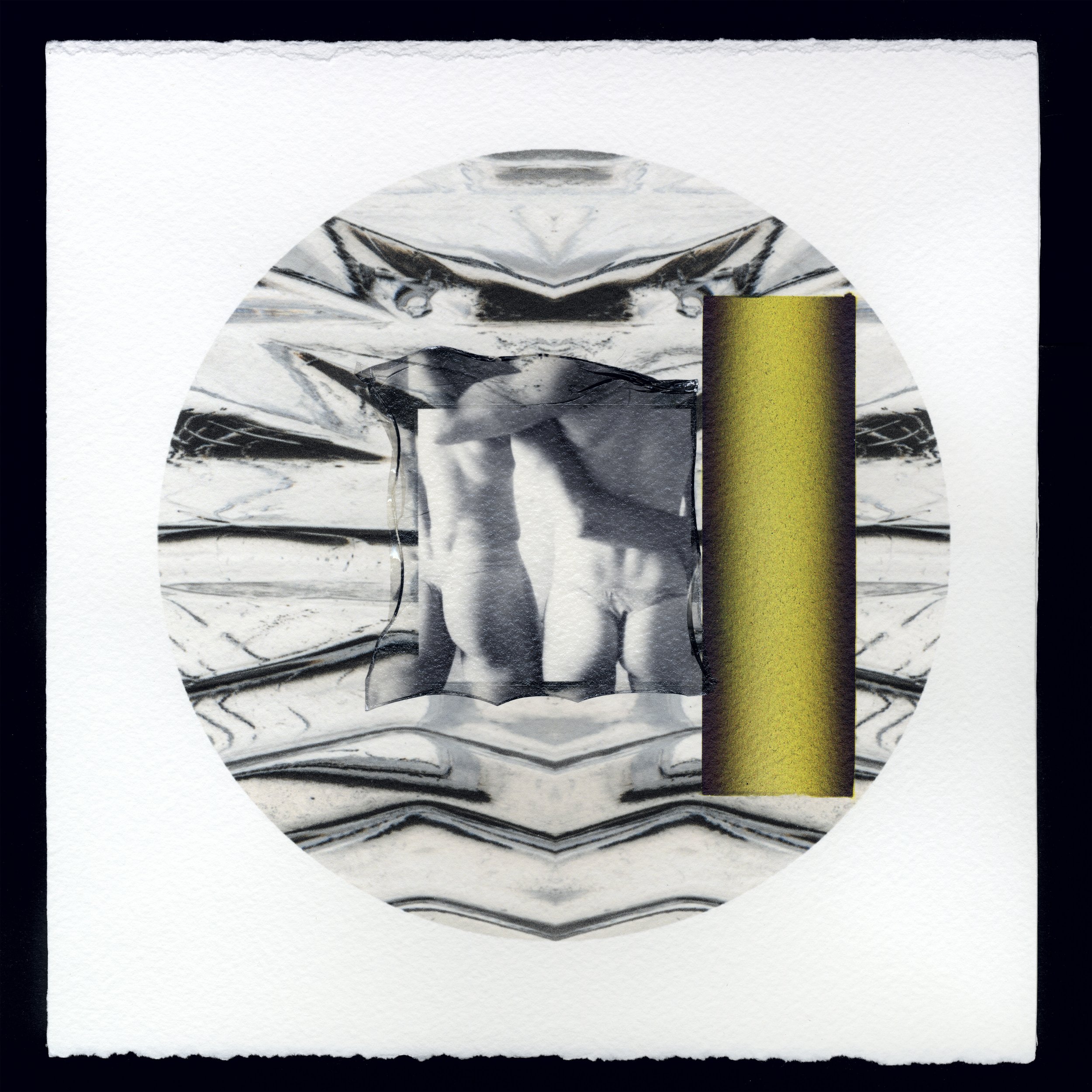
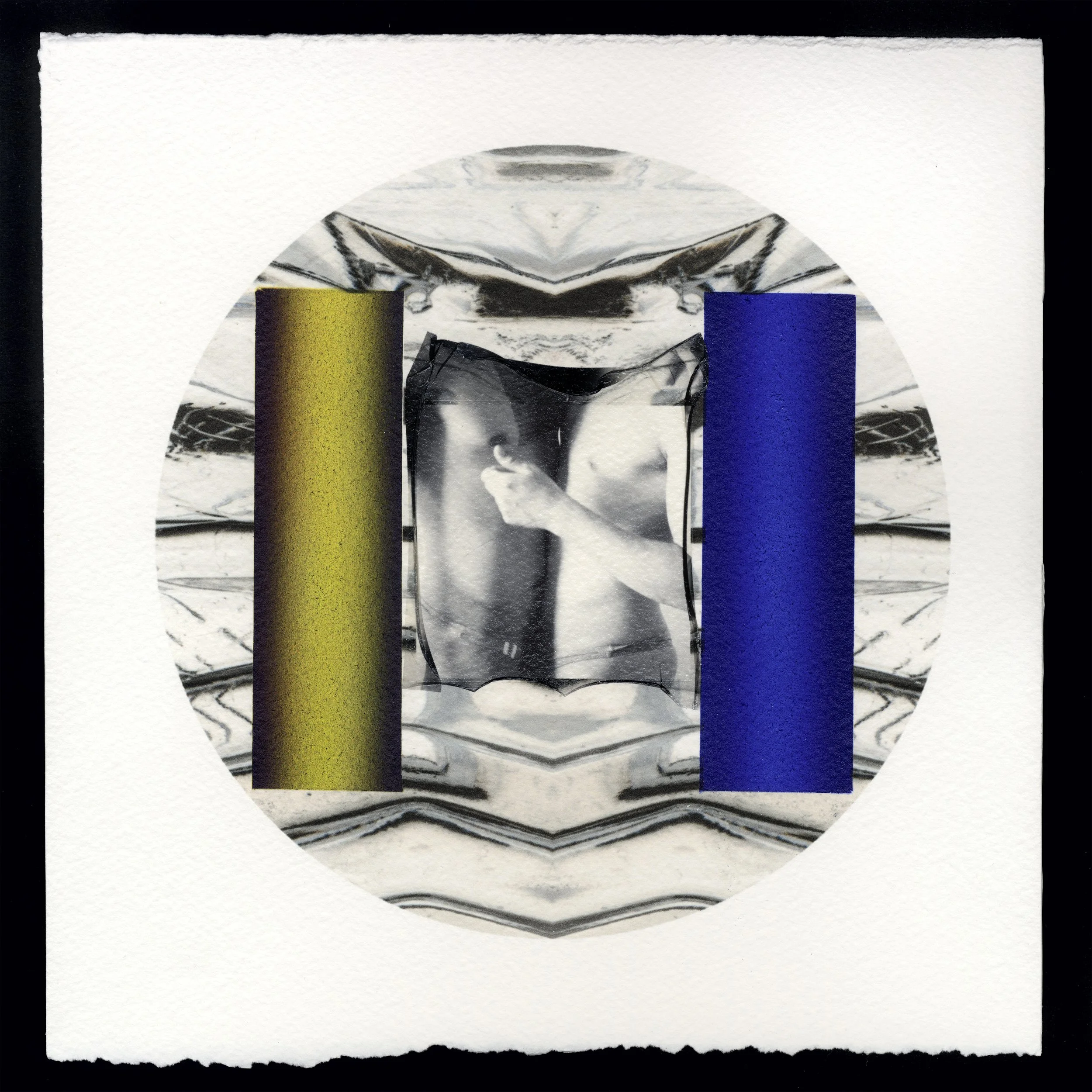

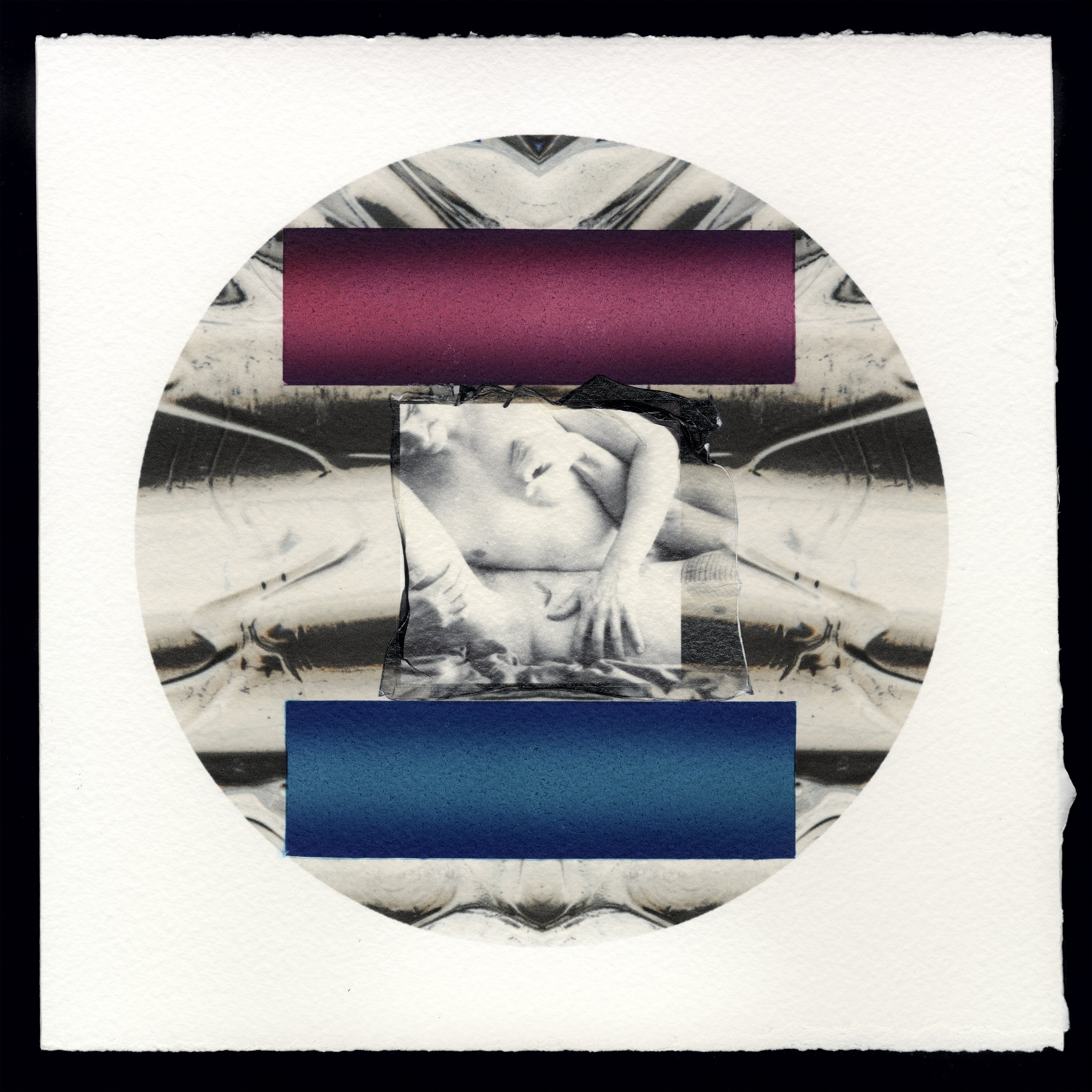

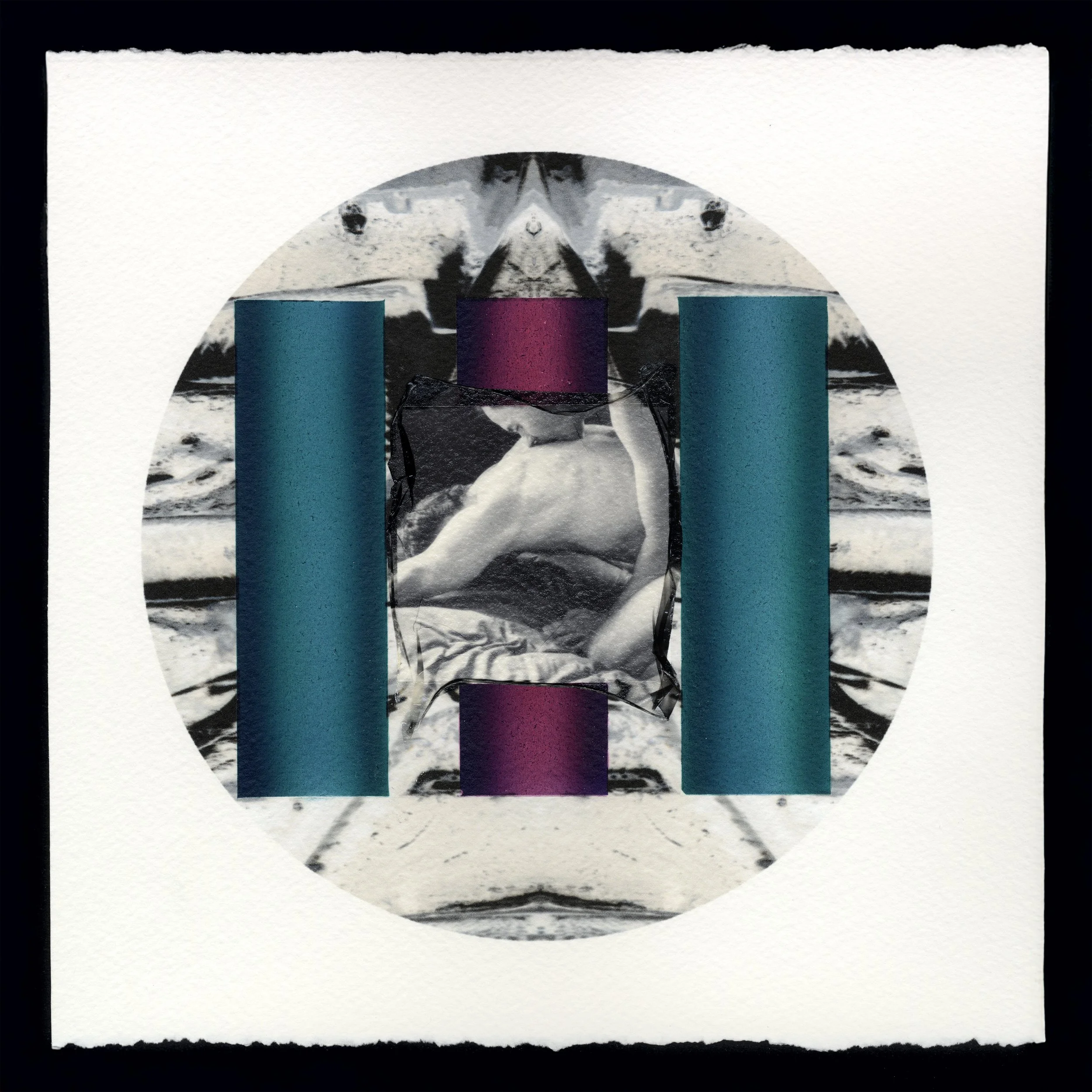


In Lightstroke, abstraction becomes a way of thinking through queerness, desire, and the unstable spaces where bodies exist without the demand to be fully disclosed. Rather than depicting queer life directly, the work translates the architectures of objects into coded terrains of desire. Photographs of ordinary forms dissolve into alien landscapes: ridges, folds, and organic structures stretch across the frame, reading less as exterior environments than as interior geographies. Cutting through these surfaces are cylinders of color, teals, golds, blues, and magentas, rendered in smooth acrylic gradients. In one work, these cylinders form a cross that both sutures and fractures the photographic ground, re-routing the terrain and producing a volatile field in which interiority and exteriority continually exchange roles.
This visual language grows directly out of my relationship to a body that has been repeatedly interrupted, altered, and medically rewritten, both of my shoulders and hips were replaced. My body became a site of reconstruction, cut, opened, stabilized, and made functional again. While these surgeries restored mobility, they also transformed how I experience touch, vulnerability, and desire. Sensation feels negotiated. Intimacy requires translation. My body does not simply exist; it must be continually navigated and protected. The cylinders that cut through these terrains operate as both interruptions and supports. They read as prosthetic intrusions, medical architectures, and protective barriers, forms that suture and fracture at once, much like surgery itself.
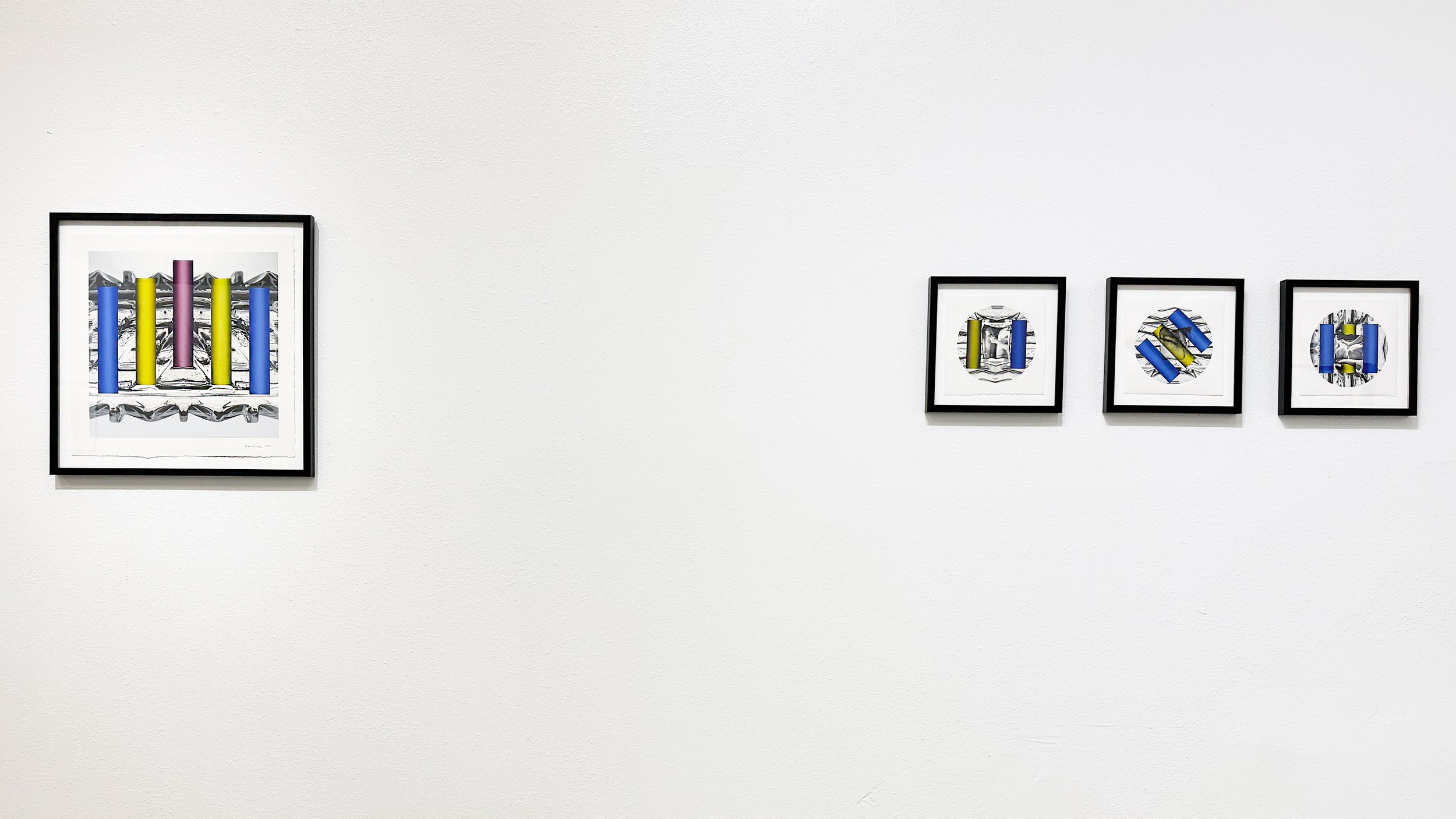
Core brings this abstraction into direct relation with the body. In these smaller works, fragile Polaroid emulsion lifts, skin-like membranes are embedded within circular compositions. In one image, two queer bodies rest against each other, their limbs overlapping in a quiet gesture of intimacy. The emulsion sits within a circular field of abstracted terrain, flanked by painted gradients. The tenderness of the bodies is held, framed, and simultaneously interrupted by the harder edges of abstraction, creating a tension between exposure and protection.
Queerness in Heartthrob does not depend on explicit iconography. Instead, it emerges through the work’s refusal to satisfy demands for clarity, confession, or stable representation. Across both series, forms collide: soft photographic terrains with hard-edged gradients, bodily emulsion lifts with symmetrical photographic architectures. These collisions act as allegories for queer social and erotic relations—how desire expands, contracts, folds, and refracts; how intimacy can be both vulnerable and fortified; how the body can be present without becoming a specimen for scrutiny.
In Ten Queer Theses of Abstraction, David J. Getsy describes abstraction as a mode of resistance to the “trap” of visibility. This framework resonates deeply here. Queer lives are often read first through compulsory legibility—through gazes eager to classify, police, or extract proof. Heartthrob instead deploys opacity, camouflage, and code. It allows queerness to operate atmospherically rather than illustratively. Abstraction becomes a way to speak from inside bodily experience, layered, altered, and still desiring without surrendering the body to exposure. It imagines queerness and intimacy as shifting, sometimes volatile architectures that hold the trace of the body while refusing to make it available as evidence.